
St Mark & St Stephen
Our Story
St Mark

St Mark’s started out as an iron mission-room, built in Fourth Avenue, Bush Hill Park, by the vicar of Enfield (St Andrew’s) in 1885 and served by clergy from the parish church. The permanent church of St Mark was consecrated in 1893 as a chapel of ease to St Andrew’s, to serve the new suburban area which had grown up around Bush Hill Park station.
An independent parish was formed in 1903 and the vicar appointed by the Bishop of London, with whom the patronage has remained. The church, a wide, light, aisled building with nave, chancel, and north and south chapels, was designed by JEK and JP Cutts in a plain early English style and built of red brick with stone dressings. It was not completed until 1915; and a spire, which was planned for the north-west tower, was never built.
An diocesan architect’s report on a Cutts Brothers church in another part of London described it as “architecturally uninspired; but spacious and with a certain dignity”. We are grateful for the faintest of praise; but since the outside of St Mark’s does look a bit forbidding, the light and colourful interior comes as a nice surprise.
The single tolling bell, cast by the Whitechapel Bell Foundry who restored and rehung it on the western elevation in 2006, is controlled electronically. Since 1910 the church has maintained worship in the Catholic tradition of the Church of England.
Dorothy Kerin
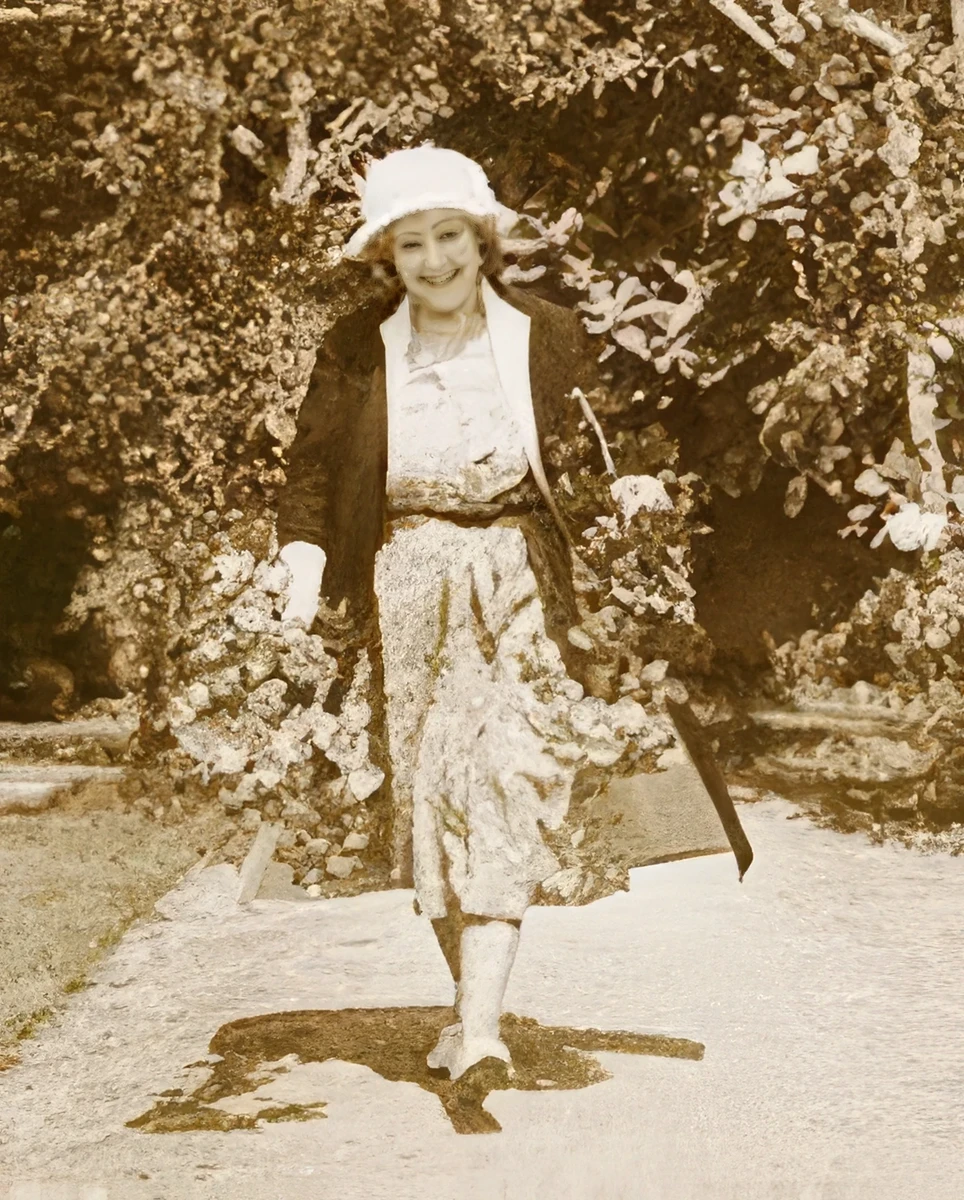
St Mark’s may not be an architecturally or historically important church, but it has had at least one famous member. The noted mystic, Dorothy Kerin, was one of only two Anglicans formally acknowledged to have received the stigmata (the marks left on Christ’s body by the nails from which he was hung from the cross). This widely-publicised event took place in 1915 in St Mark’s Vicarage, where Dorothy lived until 1929, and while she was in an extended period of prayer. Having been miraculously healed of TB in her twenties, and often suffering from other physical and mental ailments, Dorothy later founded the Burrswood healing centre in Kent. A number of books have been written about her life and work.
St Mark's Institute
In addition to the small hall behind the church in Millais Road, the parish formerly owned St Mark’s Institute, built on the west side of St Mark’s Road midway between the railway station and the church, and completed in 1903. The Institute, a sort of parish centre, saw a variety of uses over its life: it housed the enormous Sunday Schools that ran in the early years of the 20th century; it was commissioned for use as a sanatorium for wounded soldiers in the First World War; and was later used as a social security office.
It was sold by the parish to a developer for the princely sum of £27,000 in the mid 70s, who converted it into an apartment building comprising 12 flats. The block has since been known as “Chapel Court”, and is regularly marketed by local estate agents as a converted chapel.
This is no doubt because of its vaguely ecclesiastical style; but in fact it was never a chapel. This error is unfortunately repeated by the local Pevsner guide.
St Stephen

The first St Stephen's was a simple temporary building (’iron church’) put up in 1901 as a chapel of ease to All Saints Church in Edmonton. In 1906 work began on a permanent church to a gothic design by John Samuel Alder (1847-1919) with walls built of Stamford stone, with Welden stone for the corners. Bath stone is used for the windows and pillars and York stone for the steps. The church was lit by electricity. The chancel, lady chapel, organ bay, clergy and choir vestries and three bays of the nave and aisles were completed in 1907 at a cost of £6,000, and consecrated that year by the Bishop of London. In 1909 St Stephen's became a separate parish. Completion of the church, which in 1912 was estimated to cost a further £4,800, was achieved in 1916, but the planned-for tower and spire were never built.
The parish’s first pipe organ (1-manual and pedal) was built for the temporary church building by the firm of Henry Jones. It was later moved to the church of St Alphege Edmonton. The present 3-manual instrument was installed in 1908, built by the Norwich-based firm of Norman and Beard. As a mark of the importance of the St Stephen’s organ to the nation’s heritage, being of special interest and warranting every effort to preserve, it has been awarded an Historic Organ Certificate by the British Institute of Organ Studies, the amenity society for the British organ, which lobbies Government, Historic England and other national bodies.
The original cost of the present instrument was £1,150. The imposing carved organ case is a gift from the first vicar, Edward Forbes (1863-1941), as a memorial to his father.